Why Your Chimney Is Leaking and How to Fix It
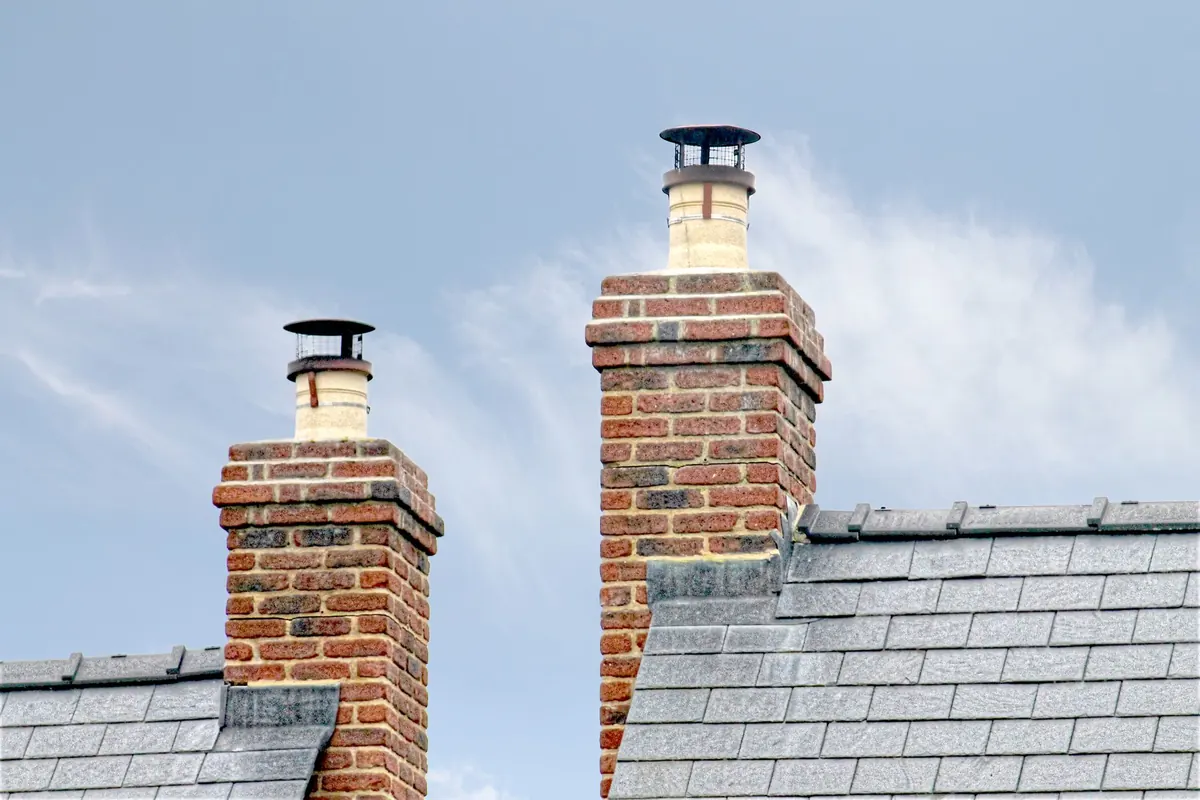
A chimney is one of the most exposed parts of any roof. It stands above the roofline taking everything the weather throws at it, held together by joints, seals and mortar that all age at different rates. When damp patches appear on a ceiling or stains creep down a chimney breast, the roof tiles usually get the blame — but the chimney is very often the culprit.
The good news is that chimney leaks are traceable and usually fixable. The trick is to find the actual entry point rather than sealing everything in sight, because water will happily travel sideways before it shows itself indoors.
Faulty Flashing Is the Usual Suspect
Flashing is the metal — traditionally lead — that seals the join between the chimney stack and the roof covering. It comes in sections: apron flashing along the front, step flashing up the sides, and a back gutter on the uphill side, which does most of the work.
Lead lasts a long time, but not forever. It splits at the bends, tears where it has been stretched, corrodes in coastal or polluted air, and pulls away from the stack when the mortar joint it sits in crumbles. The back gutter is the classic failure point: everything running down the roof collects there, so a small split or a build-up of moss quickly turns into a steady drip inside the loft.
Look for gaps between lead and brickwork, lead lifted off the tiles, split seams or white powdery corrosion. Re-dressing old lead is a short-term fix. A proper repair means new lead of the right thickness, chased into the mortar joint and dressed over the tiles, then pointed neatly.
Cracked Crowns and Failing Flaunching
Now look at the top of the stack. The crown is the sloping cap that sheds water away from the flue, and the flaunching is the mortar fillet sealing the base of the chimney pot. Both take a beating from frost.
Water sits in a hairline crack, freezes, expands and opens it further. After a few winters the crown is a web of cracks and the flaunching has separated from the pot. Water then runs down the inside of the stack, soaking the brickwork and eventually reaching the loft or the chimney breast.
Repair means chopping out the old flaunching and redoing it in sand and cement, or re-rendering the crown to a fall so water runs off. If the crown is beyond patching, it can be replaced. A drip edge and a proper slope matter more than the material chosen.
Pots, Caps and Cowls
An open flue is a hole in the roof by design. If the chimney is unused and the pot is uncapped, rain goes straight in — and there is nowhere for it to go but down through the stack.
Other pot-related problems:
- Cracked or spalled pots letting water into the flue
- Loose cowls that have shifted in high winds
- Pots removed and never replaced, leaving an open flue
- Caps fitted with no ventilation, which trap moisture and cause condensation
For an unused flue, a ventilated cap is usually the answer: it keeps rain out and lets air move through. If a gas, oil or solid fuel appliance is connected to the flue, don't change the terminal yourself. The cap or cowl has to suit the appliance, and the work should be checked by a Gas Safe registered engineer for gas, or a HETAS registered engineer for solid fuel. Get it wrong and you risk more than damp.
Porous Brickwork and Repointing
Older stacks are often built from soft bricks with lime mortar. Over decades the joints erode and the bricks become porous, so the stack behaves like a sponge in driving rain. You notice it as damp on the chimney breast inside, often worst after wind-driven rain from one particular direction.
Repointing in a suitable mortar — lime-based on older solid-wall chimneys — and repairing cracked render makes a real difference. Be wary of silicone sealers sold as a cure-all. On a traditional stack they can trap moisture in the brickwork, and they never fix a flashing or crown problem.
There is also a damp issue that isn't a leak at all. Burning coal, wood or smokeless fuel leaves salts in the flue and brickwork, and those salts pull moisture out of the air. The stain appears even in dry weather. That needs sweeping, ventilation and treatment of the salts, not a new roof.
Tracking Down the Source
Work through it logically:
- Note when the damp appears. Straight after heavy rain suggests flashing or crown. Damp in dry spells points to salts or condensation.
- Check the loft with a torch while it's raining. Water tracking down the stack or a rafter is easier to trace than a ceiling stain.
- Inspect the stack from ground level with binoculars. Cracked render, missing mortar and leaning pots are visible from down there.
- Photograph the crown and flaunching if you can get a safe view. Most leaks at the top start here.
- Test the flashing with a gentle hose, one section at a time, while someone watches inside.
Don't climb onto the roof. Falling from a roof or ladder is the biggest risk in this trade, and
Photo: Mike Percy / Pexels