A Beginner's Guide to Roof Repair: What to Expect and When to Call a Pro

Few household problems introduce themselves politely. Sometimes it's a brown ring spreading across a bedroom ceiling. Sometimes it's a slate lying in the flowerbed after a windy night. Often nothing shows at all until water has been working its way through underlay and battens for months, and the first clue is a smell in the loft. Roofs are patient, which is exactly what makes them easy to neglect.
Some roof problems are within reach of a careful householder. Plenty are not. Here's where that line sits, what you can sensibly do in the meantime, and the signals that mean it's time to bring in someone who does this every day.
Diagnose before you climb anything
Water is a poor guide to where the fault actually is. It runs along battens, follows rafters and drips off the lowest point it can find, so the stain on your ceiling is rarely sitting directly beneath the hole. Chasing it from above is guesswork until you've looked properly.
Start in the loft with a torch. Look for daylight between tiles, dark tidemarks on rafters or sarking, torn or sagging underlay, and damp insulation. Then go outside and use binoculars from the ground: cracked or slipped tiles, missing mortar on ridge and verge, moss holding water against the surface, perished flashing around chimneys and soil pipes, gutters pulling away from the fascia.
Write down what you find and where. Those notes will save a roofer time, and they'll help you tell a small repair from the start of something bigger.
The DIY jobs that are genuinely sensible
Honestly, most of them are at ground level or reached from a window. Work that keeps your feet on something solid is worth doing well:
- Clearing gutters and downpipes, using a ladder on firm level ground or a reach pole from below.
- Removing moss and debris from a valley or gutter you can reach without leaving a ladder.
- Photographing the problem from the ground and from inside the loft, so you have a clear record.
- Containing the damage indoors — buckets, towels, moving furniture, and lifting belongings off the floor.
- Sealing a small gap you can reach from a dormer window or a genuinely low, flat, safe section, on a dry day, with a product made for that job.
What isn't sensible: walking on a pitched roof, re-bedding ridge tiles, replacing slates, working anywhere near a chimney, or anything on a two-storey house. Every one of those involves height, brittle materials and weather, and none of them are forgiving of a wrong move.
Safety, in plain terms
Falls from ladders and roofs cause some of the most serious injuries around the home, and the people who get hurt are usually competent, careful adults who thought the job would take five minutes. A few rules worth keeping:
- Put the ladder on firm, level ground, foot it or tie it off, and keep three points of contact.
- Keep your belt buckle between the stiles, and move the ladder rather than overreaching.
- Don't work in wind or rain, or on wet or frosty surfaces.
- Never step sideways from a ladder onto a roof.
- Tell someone you're going up, and keep a phone in a pocket.
Roofs aren't built to be walked on. Old tiles crack underfoot, wet moss behaves like ice, and a slip can tear underlay and battens on the way down. Never pressure-wash a roof either — it strips the surface and drives water where it shouldn't go.
Signs you need a professional roofer
- Water stains on ceilings or walls that reappear after a repair.
- Damp patches or black mould in the loft, or insulation that feels sodden.
- Daylight visible between tiles when you stand in the loft.
- Tiles or slates missing, cracked, or slipped out of line after a storm.
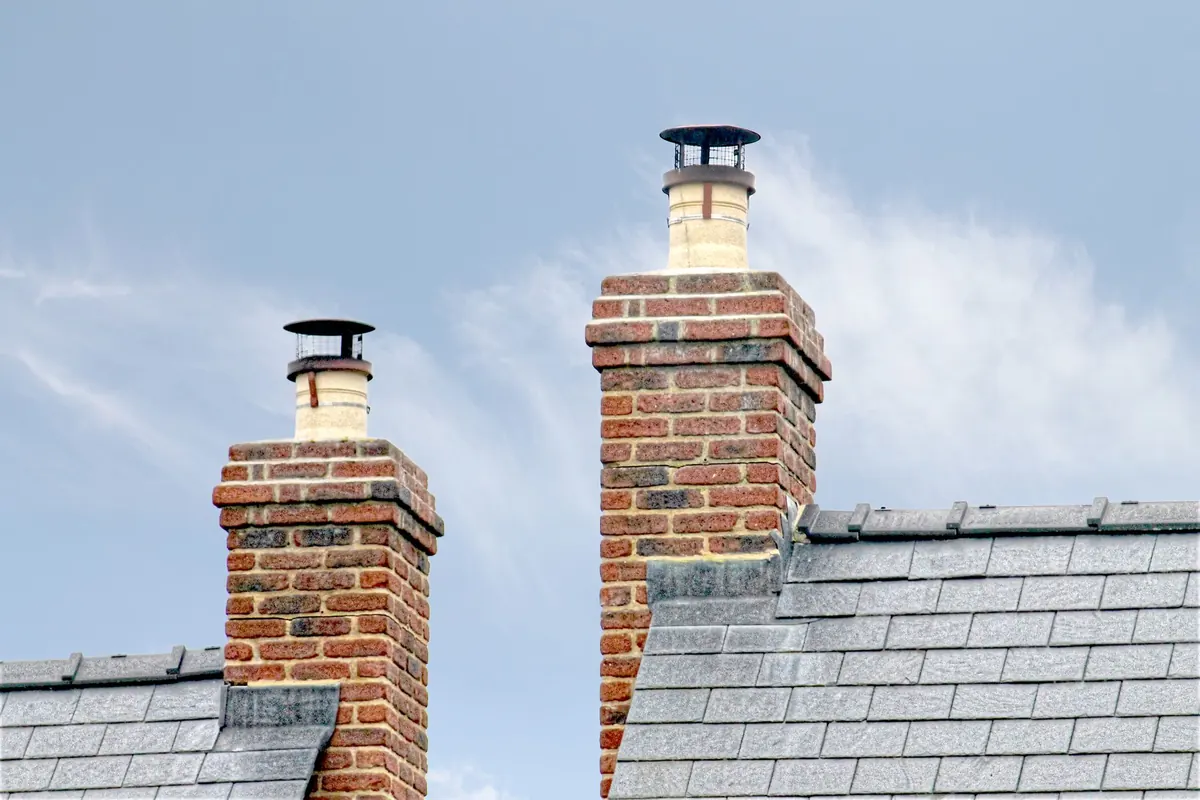
- Crumbling mortar along ridges, verges or around a chimney stack.
- Rusted or split flashing at a chimney, valley, or around a roof window.
- Sagging rooflines, a dip in the surface, or gutters hanging away from the building.
- Any leak you can see but can't confidently trace to one obvious point.
Two situations deserve urgency. If water is anywhere near lights, sockets or a fuse box, switch off at the consumer unit and get it looked at straight away. And if a flue or gas appliance is involved, that's a job for a Gas Safe registered engineer — a roofer shouldn't be touching it.
What to expect when a roofer visits
The survey
A good roofer will want to get into the loft as well as look at the outside, and may take photographs as they go. If someone quotes from the pavement without looking properly, that's a warning sign rather than efficiency.
The quote
Ask for it in writing, and check what's included: scaffolding or a tower, waste removal, VAT, timescales, and how payment is staged. A reputable firm won't mind putting terms down clearly, and they won't push you for a large cash deposit up front. If you're unsure about a contract, a deposit, or your rights if something goes wrong, take proper advice before you pay anything.
The work itself
Weather will sometimes delay things, so build in a little patience for anything outdoor. Ask who'll be on site, whether scaffolding stays up overnight, and how your garden and driveway will be protected. Before and after photographs are a reasonable request on any job you can't inspect yourself.
Temporary fixes and when to stop
While you wait for a visit, contain rather than repair. Move what you can, catch what you can, and photograph the damage as it develops for any insurance claim. If a ceiling starts to bulge with trapped water, keep everyone out of the room and get someone in — that's not a problem to solve with a drill.
Avoid miracle sealants applied from the ground, and don't climb up during a storm because you can hear dripping. You'll do more harm than good, to the roof and possibly to yourself.
Making the call
Before you phone, gather the useful details: photographs, roughly how old the roof is, when the leak started, and whether it only appears with wind from a particular direction. That last one often narrows things down quickly, because a leak that arrives only in a westerly is telling you which edge to look at.
Then ask two or three roofers to take a look, and compare both the diagnosis and the price rather than the price alone. Keep notes on what each one says — if two of them tell you the same thing, you're probably looking at the real problem.
A small repair done properly now is far less trouble than a ceiling, a plasterer and a joiner in six months' time. And if a job looks beyond you, deciding not to climb is the sensible answer, not a failure.
Photo: Alexas_Fotos / Pixabay